

August 7, 2026
More Than Rye: Pennsylvania’s First Stills (1700–1750)
Ask most people how Pennsylvania’s distilling story starts, and they’ll say rye. They’re not wrong to start there — we told that story in Long Before the Rebellion: The Delaware Valley Origins of Pennsylvania Rye, tracing rye’s roots back to Swedish and Finnish grain fields, Dutch copper stills on the Delaware, and a 1676 law that turned spoiled grain into a farm’s legal outlet. Grain was scarce to move and easy to grow here, and distilling — turning a bulky, perishable harvest into something compact enough to carry over mountain trails — was less a craft than a necessity.
But for the first half of the eighteenth century, rye was one voice in a much noisier room. If you’d walked into a Pennsylvania tavern in 1740, you’d have found rum on the bar, applejack in the cellar, and grain spirits made from whatever the harvest happened to be that year — rye included, but rarely rye alone.
A Colony That Preferred Beer
Pennsylvania’s own founder wasn’t much of a spirits man. William Penn favored malt beer as a wholesome, everyday drink, built a brewer’s house at his Pennsbury Manor estate in 1683, and granted land in Philadelphia to commercial brewers like William Frampton. Distilled spirits, in Penn’s Pennsylvania, were tolerated more than celebrated.
That didn’t stop the colony from trying to tax them. In 1684, the Provincial Assembly passed the colony’s first excise duty on distilled spirits as part of a broader “Bill of Aid and Assistance” — and then, facing enforcement headaches and public pushback, quietly let it go uncollected. Lawmakers tried again in 1738 and 1744, with the same result. Long before anyone in Western Pennsylvania organized against a whiskey tax, Pennsylvanians had already been ignoring one for sixty years.
Philadelphia’s Other Trade: Rum
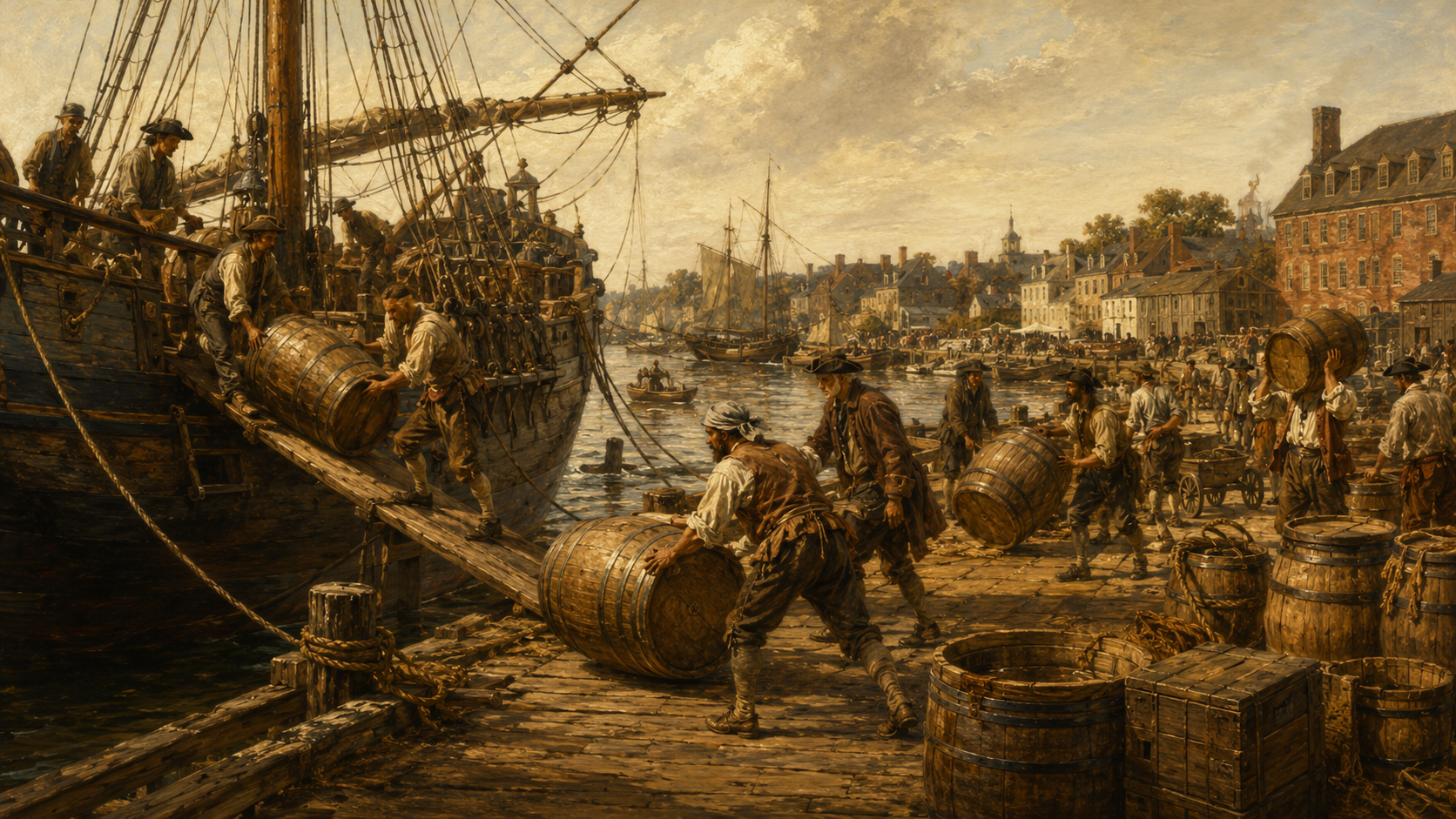
While farmers upstate were nursing their stills, Philadelphia was busy running one of the busiest rum trades in the colonies. As a major Atlantic port, the city imported hogsheads of West Indian molasses and distilled them into rum for local taverns, laborers, and the merchant fleet. For much of the early 1700s, rum — not rye — was the spirit most likely poured in a Philadelphia public house. It stayed that way until British trade restrictions and, eventually, the Revolutionary War severed the molasses supply and pushed the colony toward home-grown grain spirits instead.
Whatever the Harvest Gave You
Away from Philadelphia’s port and the orchard counties, most farmhouse stills weren’t dedicated to any one grain at all. A farmer ran whatever came off the fields that season — rye when it was plentiful, but also wheat, corn, and oats, often blended together in the same batch. Corn sweetened a harsh mash; wheat softened it. The still wasn’t a specialty operation chasing a signature style. It was a piece of farm equipment doing the same job a gristmill did, just for a different kind of shelf-stable product. Rye’s rise to the top of that mix — and the reasons it eventually pulled ahead of wheat, corn, and everything else — is a story for another day.
Orchards, Not Just Fields
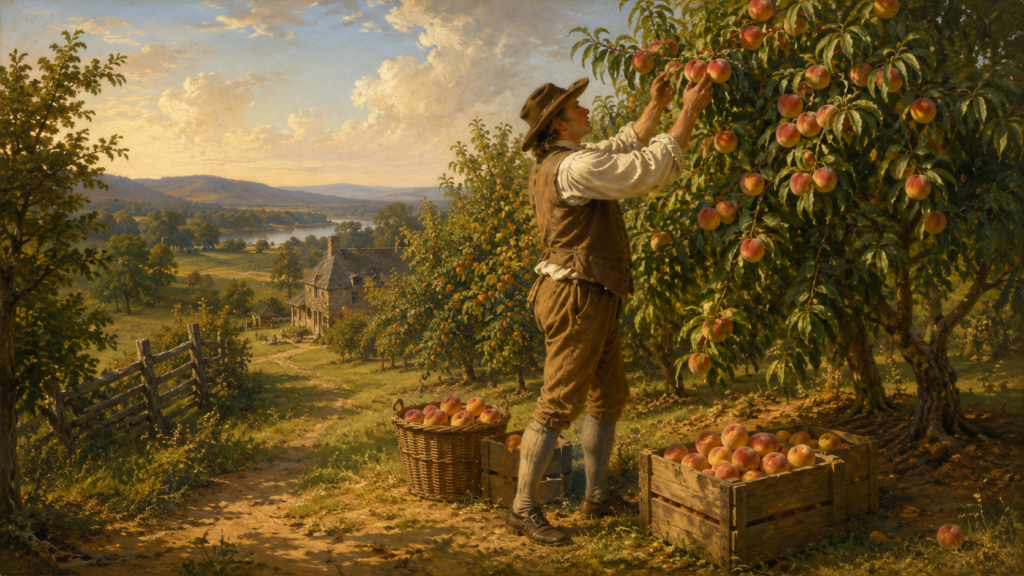
Out in the counties — Berks, Lancaster, Chester — orchards were doing just as much work as grain fields. Nearly every established farm kept an apple press, and while much of that cider was drunk fresh or fermented, plenty was distilled into applejack. Some of it was made the old winter way: freezing hard cider and skimming off the concentrated spirit left behind, no still required. Peach brandy had its own following in the same counties, prized for its aroma and put to use in tavern punches and home remedies alike.
The Legacy, Beyond the Rye Aisle
That variety — rye, rum, apple, peach, whatever the season handed you — is still alive in Pennsylvania distilling today, just not always where you’d expect to look. Barley Creek Distilling in the Poconos still makes an annual batch of Applejack the old orchard way. Ridge Runner Distillery in the Laurel Highlands keeps Peach Brandy in steady rotation, a direct descendant of the fruit spirits Berks and Chester County farmers were making three centuries ago. And in Bucks County, not far from the Delaware River that once carried Philadelphia’s molasses ships upriver, 3 Sisters Rum keeps the colony’s original favorite spirit alive and well.
Rye earned its reputation honestly, and it’s a story worth telling — we’ve told part of it already, and there’s more ahead. But Pennsylvania’s first century of distilling was never a one-note story. It still isn’t.
Find It Near You
Rye, rum, brandy, or something in between — Pennsylvania’s distillers are still turning the harvest into something worth sharing. Explore the interactive map at Spirits of PA to find distillers and PA-made spirits near you.

Spirits of PA Bartender
Ask for a cocktail. Ask what to drink tonight. Ask where to find a distillery worth visiting. You'll get a real recommendation grounded in Pennsylvania's craft distilling heritage.
Meet the Bartender
Mailing List