


October 21, 2026
The People Behind Pennsylvania Rye

Follow the grain, malt, still and barrel to discover the work behind your next pour.
A distillery name gives you a place to start. Order a Pennsylvania rye, turn the bottle in your hand, or step into a tasting room, and you have an introduction to the people who made it. But there is another conversation waiting just beyond the label.
Who grew the grain? Who prepared the malt? Who built the barrel? And how did the distiller bring those contributions together?
Following those questions gives a distillery visit more depth. You begin to see the whiskey through the work it took to produce it, with connections to agriculture, grain processing and barrel making. Those connections belong to a particular producer and a particular whiskey. The Pennsylvania businesses below offer several ways into that story, rather than one shared supply chain.
The grower: start with a place
Before grain appears on a distillery’s recipe sheet, someone has raised and harvested a crop. Asking where it grew can turn an ingredient into a place you can picture, and a general description into a story worth following.
Dad’s Hat in Bristol makes local farm relationships part of its published production story. The distillery describes sourcing rye through regional partners and returning spent mash to farmers for livestock feed. It is a useful example of how a distillery’s connection to agriculture can continue beyond the grain delivery.
Pennsylvania’s malt industry offers another view of that relationship. Double Eagle Malt identifies Glenn and Donna Miller of Halifax, in Dauphin County, among its farming partners. Its farmer profile describes them growing malting barley alongside other crops. That example concerns barley for malt, rather than rye grain, but it helps explain why a whiskey story can lead to more than one crop and more than one trade.
A distillery’s address alone does not tell you where every ingredient originated. Let the maker explain the sourcing behind the bottle in front of you.
Ask on your visit: “Where does the grain for this whiskey come from?”
The maltster: a different kind of grain work
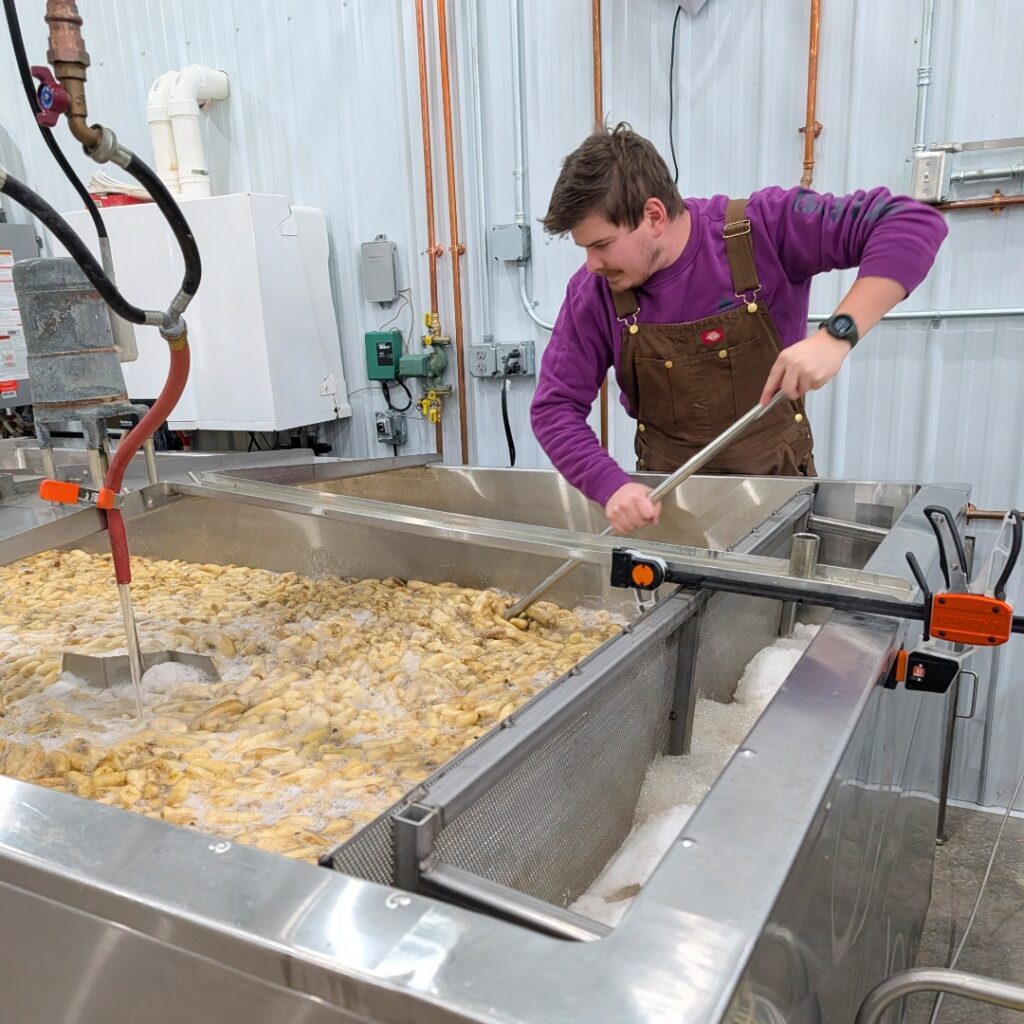
A maltster prepares grain for a different job. Malting involves soaking grain, allowing it to begin germinating, and then drying it. During that controlled process, enzymes develop that help convert starch into sugars during mashing. The maltster’s choices also influence the malt’s flavor and color.
Malt is therefore a prepared ingredient, not simply another word for grain. Barley can be malted, and so can rye. Nor does the presence of malt mean that every grain in a whiskey’s recipe has been malted.
Dad’s Hat illustrates the distinction with its published grain bill: 80% rye, 15% barley malt and 5% rye malt. The recipe names both the grains and how some of them have been prepared.
Double Eagle’s portfolio includes Heritage Rye, a malt made from Pennsylvania winter rye. It gives a familiar ingredient a specific Pennsylvania source to ask about.
Ask on your visit: “Which grains in this recipe are malted, and who makes the malt?”
The distiller: making the choices that bring it together
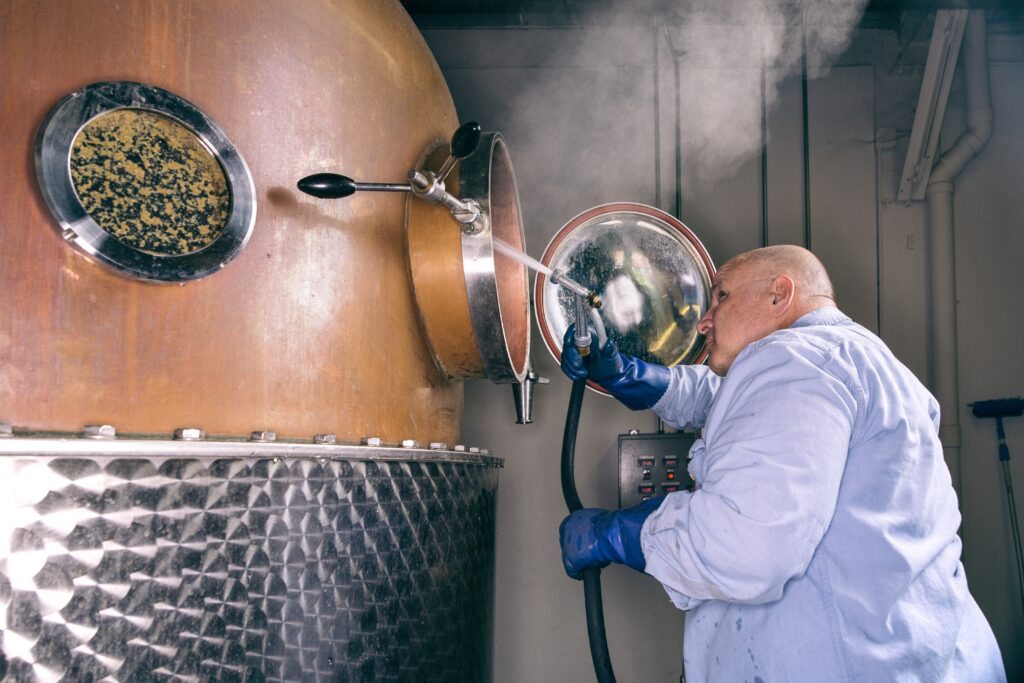
The mash bill is the grain recipe, but the distiller’s work continues through mashing, fermentation and distillation. During fermentation, yeast turns sugars into alcohol. Distillation then concentrates the alcohol and helps determine which flavor compounds carry into the spirit. Fermentation conditions and the decisions made during distillation contribute to its character before barrel aging begins.
Recipes offer an approachable place to begin understanding those choices. Compare Dad’s Hat’s grain bill with Liberty Pole Spirits’ published recipe for Old Monongahela Full Proof Rye: 61% rye, 13% red winter wheat, 13% rye malt and 13% malted barley. Both include rye and malted grains, but their proportions and ingredients differ.
You do not have to memorize the percentages. Ask why the distiller chose them. What does the team want that recipe to achieve? Which part of fermentation or distillation do they pay closest attention to?
That conversation lets the maker explain a whiskey in their own terms. It also gives you something more useful to take home than a list of equipment names.
Ask on your visit: “What decision in your process makes the biggest difference to this whiskey?”
The cooper: shaping the whiskey’s time in wood
After distillation comes barrel aging, bringing another trade into the story. The cooper makes the barrel, preparing and assembling the wood that will hold the spirit as it matures.
At US Barrel in Mount Pleasant Mills, central Pennsylvania, that work includes making white-oak barrels for the spirits and brewing industries. The company describes fire-bending its barrel wood, fitting metal hoops, and offering different toast and char options.
Those details give you a way to look beyond the barrel’s familiar shape. Wood preparation and the treatment of the interior are part of its design. US Barrel describes the interaction between the spirit and the barrel’s interior as central to maturation, and its different toast and char options give distillers choices about that interaction.
The barrel maker and the source of the oak are also separate parts of the story. Knowing where a barrel was assembled does not, by itself, identify where its wood grew.
Ask on your visit: “Who made your barrels, and why did you choose them?”
Follow one connection on your next visit
There is no need to turn a tasting into an interrogation. Choose one detail that catches your attention: a grain variety, an unfamiliar ingredient, a barrel beside the still. Ask about it, then follow the answer.
You might leave with a farm name to remember, a clearer understanding of malt, or a new appreciation for the work inside a cooperage. You will have a more specific story about the whiskey you came to explore.
Start with one question: “Who else helped make this whiskey?”
Find your next stop in the Spirits of PA distillery directory.
Photo Credit: Dad’s Hat Rye (first and third photo), Tall Pines Distillery (second photo)

Spirits of PA Bartender
Ask for a cocktail. Ask what to drink tonight. Ask where to find a distillery worth visiting. You'll get a real recommendation grounded in Pennsylvania's craft distilling heritage.
Meet the Bartender
Mailing List