


July 27, 2026
Long Before the Rebellion: The Delaware Valley Origins of Pennsylvania Rye
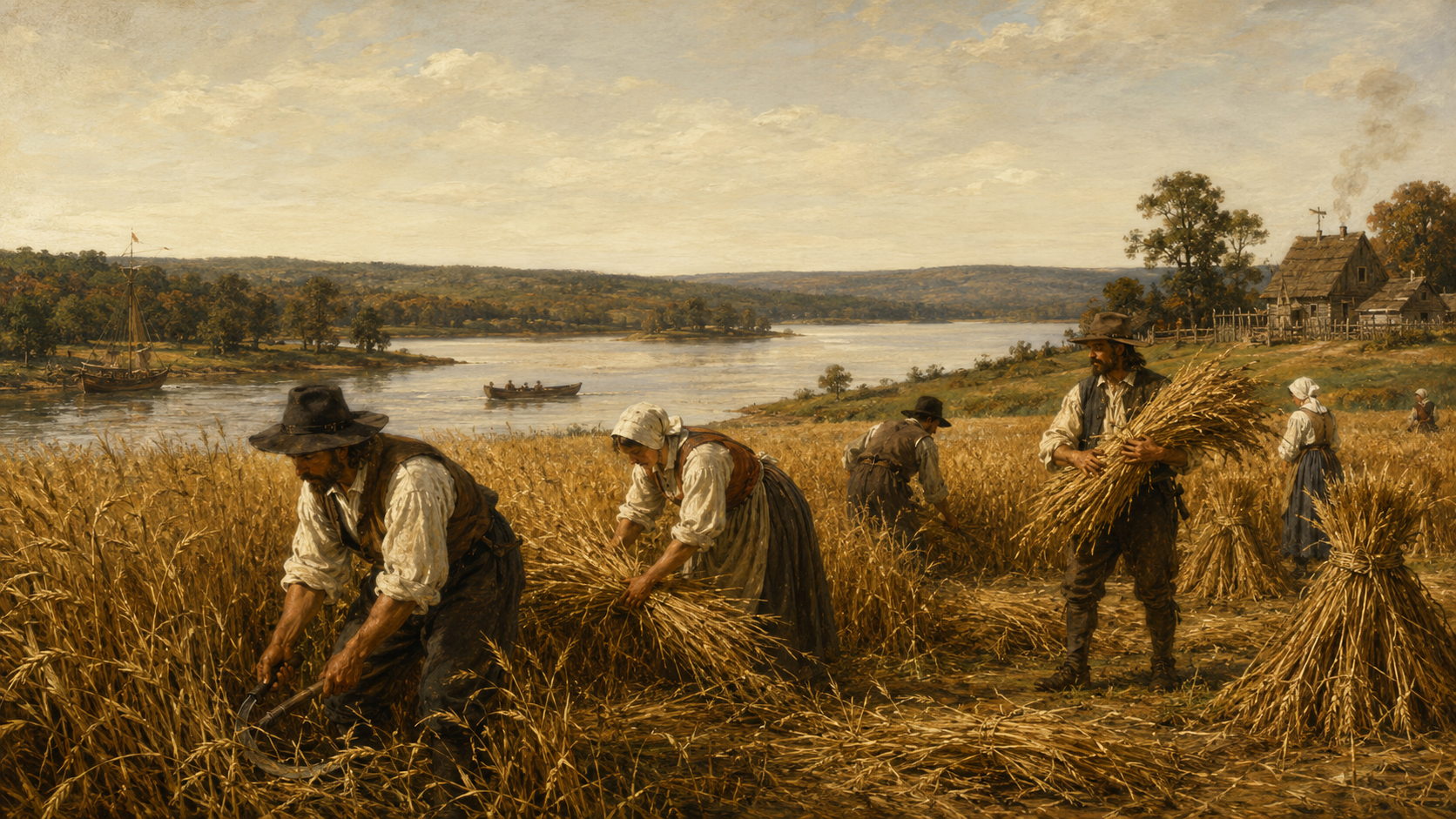
When people talk about Pennsylvania’s rye whiskey heritage, the story usually starts on the
frontier — the Monongahela Valley, farmer-distillers with copper stills tucked behind their barns,
and the Whiskey Rebellion that put Western Pennsylvania on the map in 1794. It’s a great
chapter. It’s just not the first one.
The real roots of Pennsylvania rye reach back more than a century earlier, and they start in the
east — along the Delaware River, among Scandinavian, Dutch, English, and German settlers
who were fermenting and distilling grain in the region decades before anyone in the Mon Valley
picked up a mash paddle. By the time rye whiskey became a frontier symbol of independence,
the essential pieces — the grain, the stills, the instinct to waste nothing — had already been in
place for generations
A Rye Crop Built for Pennsylvania’s Soil
The story begins with Scandinavian settlers. In March 1638, the ships Kalmar Nyckel and Fogel
Grip landed at Fort Christina on the Delaware, founding the colony of New Sweden. Many of the
settlers were Finnish subjects of the Swedish crown — “Forest Finns” — who brought with them
svedjebruk, a slash-and-burn farming method suited to the region’s dense forests. Timber was
cleared, dried, and burned, and winter rye was sown directly into the resulting ash bed, no
plowing required. Historians note the returns could be extraordinary compared with conventional
European fields, and the Finnish rye varieties that thrived in Pennsylvania’s rocky, acidic soil
produced the surpluses that eventually moved fermentation from the kitchen to the still.
Brewing came first. New Sweden’s governors built out the colony’s capacity quickly — Governor
Printz established a mill and brewery at Tinicum in 1643, and Governor Rising imported a 700-
pound copper kettle to Fort Christina in 1648, creating what local histories describe as the
region’s first large-scale commercial brewery.
Dutch Traders and the First Named Distillers
When the Dutch took over the lower Delaware in 1655, brewing and distilling became a formal
trade. New Amstel — present-day New Castle, Delaware — supported multiple breweries, and
by 1657 Harman Jansen is recorded as the first professional brewer named in Delaware Valley
history. A few years later, Reynier Reynertsen Vander Cooley took over a Bever Street brewery
and became one of the earliest documented figures in the region running both a brewery and a
still. He returned his copper distilling apparatus to New Castle in 1670 and kept working the
combined trade for another decade.
These Dutch and Scandinavian settlers brought a grain-first distilling tradition with them from
home — closer to Northern Europe’s brännvin, distilled from rye, barley, and wheat, than to the
molasses-and-rum tradition the English colonies further south leaned on. From the very
beginning, the Delaware Valley’s spirit of choice was grain.
The Law That Made the Still a Farm Fixture
In 1676, under the Duke of York’s Laws, the colonial government passed a rule prohibiting
settlers from distilling any grain unless it was already “unfit to grind and boalt.” On its face, that
sounds like a restriction. In practice, it did something more interesting: it confirmed that grain
distilling was already common enough by the 1670s to need regulating, and it turned the still
into an approved outlet for spoiled or damaged rye — grain that had gone damp, moldy, or
buggy before it reached the gristmill.
That’s a very Pennsylvania kind of solution. Nothing went to waste. A ruined harvest that
couldn’t become flour could still become a shelf-stable, valuable spirit — and the copper pot still
earned its permanent place on the farm not as a luxury, but as agricultural equipment.
Germantown, Rye Bread, and the Farmhouse Still
William Penn’s arrival in 1682 brought a new wave of settlers, including the German, Swiss, and
Dutch families who landed aboard the Concord in October 1683 and founded Germantown
under Francis Daniel Pastorius. They weren’t farmers at first — many were skilled weavers —
but the Mennonite and sectarian families who followed built intensive farms through
Germantown, Lancaster, and the surrounding countryside.
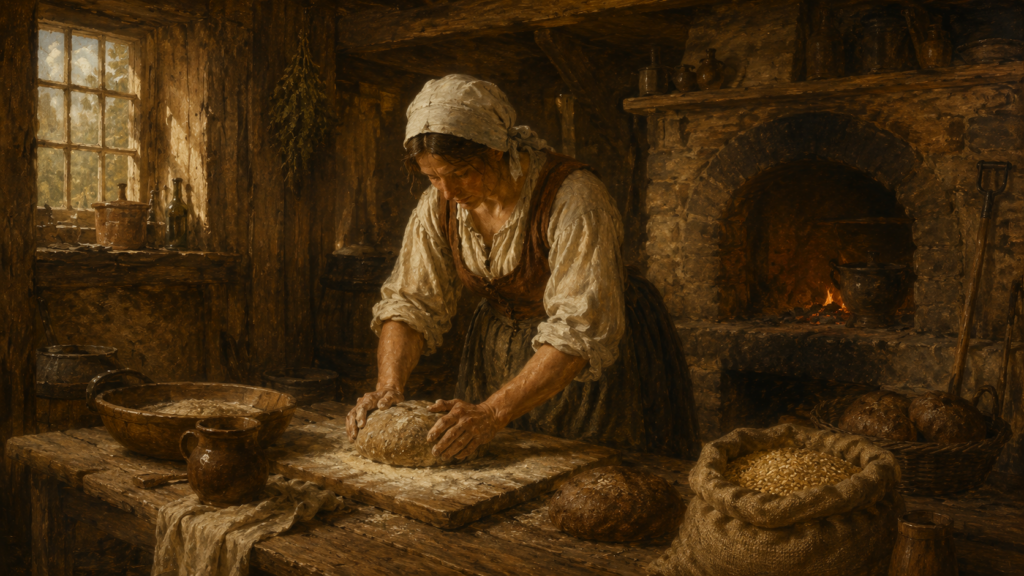
These German-speaking settlers had a strong cultural attachment to dark rye bread and
sourdough, unlike the English preference for wheat loaves, and they planted rye accordingly.
Rye straw thatched their roofs; rye grain fed their bread ovens, their livestock, and — once the
first two needs were covered — their stills. The high-rye, touch-of-malted-barley mash that
came out of these farmhouse kitchens is the direct ancestor of the mash bill that still defines
Pennsylvania-style rye today.
Turning Grain Into Currency
By the close of the seventeenth century, Pennsylvania’s farms were producing more grain than
the primitive roads and river landings could economically move. A horse could carry a modest
load of raw rye — or that same horse could carry a load of rye concentrated into spirit, worth
many times more per pound. With hard currency scarce under British trade policy, rye whiskey
filled the gap: it paid wages, settled debts, and changed hands like money across the colonial
countryside, long before it ever became a rebel’s cause.
The Legacy, East and West
The center of gravity moved west over the following century, and the story most people know —
the Mon Valley, the Whiskey Rebellion, the “Monongahela style” — is a real and important one.
But it’s a second chapter, not the first. The instincts that built it — grow what the land will
support, waste nothing, turn a surplus into something worth keeping — were already three
generations old by the time Western Pennsylvania farmers picked them up.
You can still find that thread today, especially in the east. Stoll & Wolfe Distillery in Lititz, Lancaster County, carries the name of Dick Stoll, a master distiller whose own lineage runs back through Pennsylvania’s historic Michter’s operation — and whose work reviving heirloom Rosen rye is, in its own way, the same impulse that sent seventeenth-century farmers looking for grain suited to Pennsylvania ground. Dad’s Hat distills along the Delaware River in Bristol, Bucks County — arguably the same stretch of water that carried Swedish and Dutch settlers’ grain and spirits north from Fort Christina — and sources its rye from a nearby Bucks County farm. And Eight Oaks Farm Distillery, out in the Lehigh Valley, runs as a true farm distillery, with grain grown steps from the still — a working version of the Germantown-era model where the field and the still were never really separate operations.
They’re a few names among more than 200 distillers working across the Commonwealth today, each carrying a piece of this story forward in their own way. See more eastern PA distillers with stories in the Dutch Country Roads, Philadelphia, and Lehigh Valley regions at spiritsofpa.com/distilleries.

Spirits of PA Bartender
Ask for a cocktail. Ask what to drink tonight. Ask where to find a distillery worth visiting. You'll get a real recommendation grounded in Pennsylvania's craft distilling heritage.
Meet the Bartender
Mailing List